From Melbourne to Duke University, an Australian innovation takes its next step
What could epilepsy care look like if doctors could see months of brain activity, instead of a snapshot taken over hours or days?
That’s the question Duke University is helping answer through DETECT, a US multicentre clinical trial of Minder, an implantable monitoring device developed by Melbourne medtech company Epiminder. Placed beneath the scalp, Minder is designed to record brain activity continuously for months as people go about their daily lives. The trial is testing whether that longer view helps clinicians make better-informed treatment decisions for people with epilepsy.
The story began here in Melbourne. Professor Mark Cook AO and his collaborators set out to solve a problem he knew from clinical practice at St Vincent’s Hospital Melbourne. Seizures can be hard to capture during a short monitoring window, and some go unnoticed by patients altogether. Developing Minder brought together three ACMD partners, St Vincent’s Hospital Melbourne, the University of Melbourne and the Bionics Institute, with Cochlear contributing its expertise in implant design and manufacturing.
It’s a story close to home for ACMD. We invited Mark to open our Research Seminar Series and share what it takes to move an idea through development, clinical testing and into the hands of clinicians. Seeing Minder studied at Duke brings that journey into focus. A problem identified in a Melbourne clinic is now the subject of a trial that could inform how epilepsy care is delivered around the world.
That’s the kind of journey we want to accelerate at ACMD. How do we get the clinician who sees the problem, the engineer who can help solve it and the partners who can develop and test it working together earlier? The more often we can make those connections, the more chances Australian ideas have to make a difference for patients here and around the world.
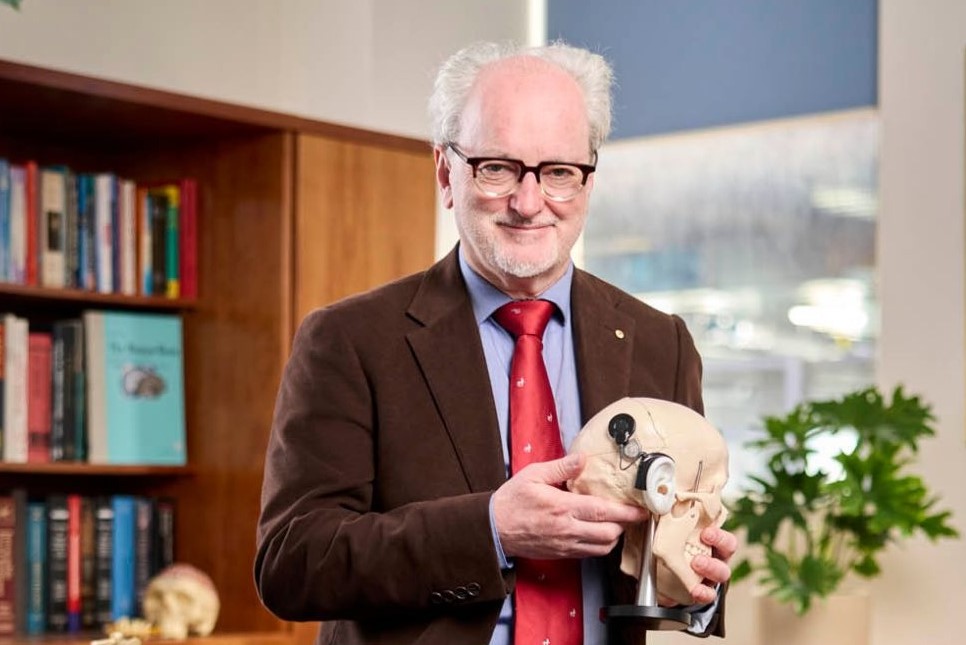
Professor Mark Cook AO